


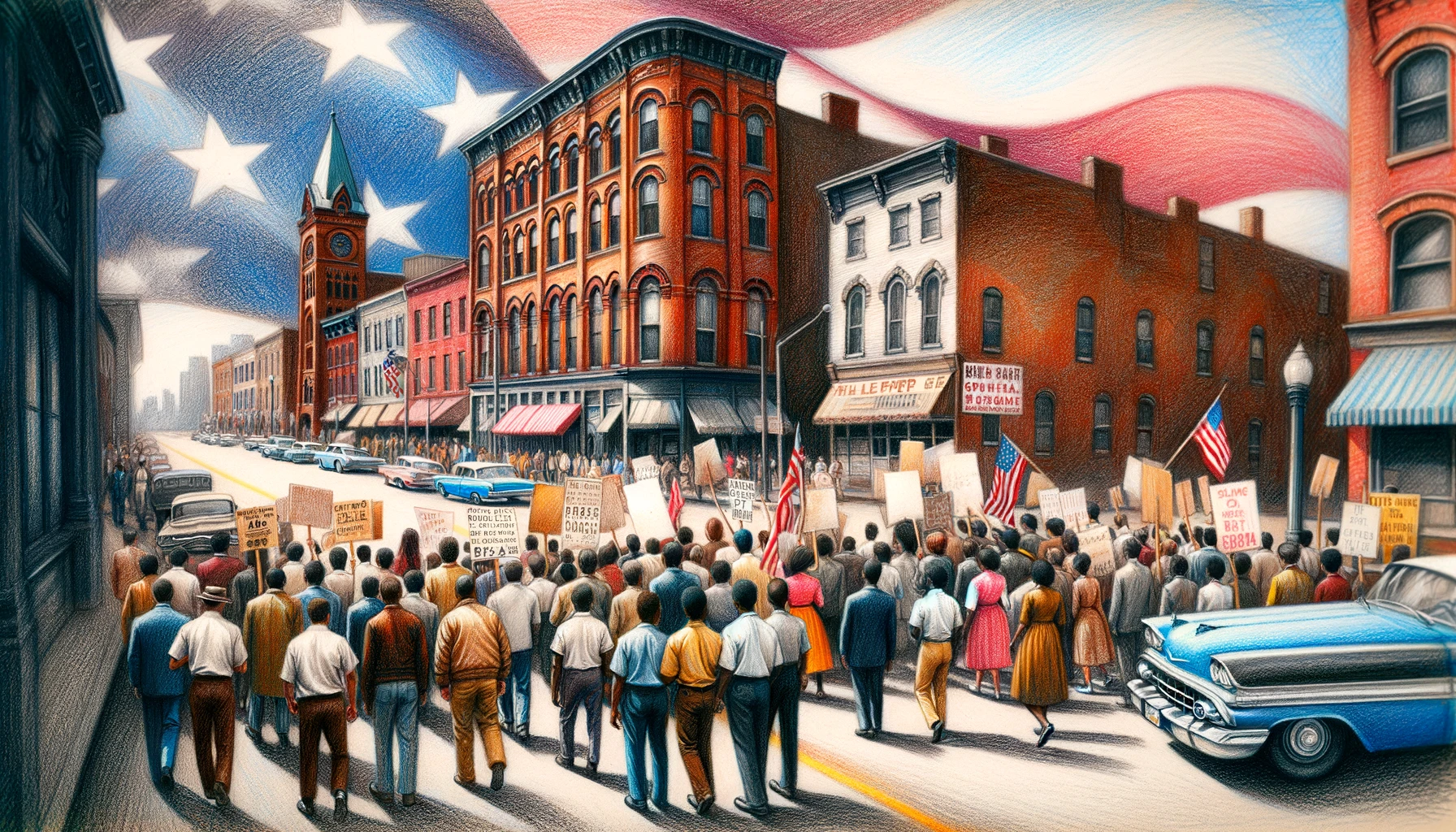

The National Advisory Commission on Civil Disorders, commonly known as the Kerner Commission after its chair, Governor Otto Kerner Jr. of Illinois, was established by President Lyndon B. Johnson in July 1967. The commission’s purpose was to investigate the causes of the 1967 race riots in the United States and to provide recommendations for the future.
The commission released its report on February 29, 1968, which became a pivotal moment in the understanding of racial dynamics in America. The Kerner Report famously concluded that the nation was “moving toward two societies, one black, one white—separate and unequal.” It identified racism, segregation, poverty, and a lack of economic opportunity as the root causes of urban unrest, challenging the notion that the riots were simply the result of criminal behavior or a lack of personal responsibility among African American communities.
The report was critical of federal and state governments for failing to address social injustices and economic inequalities that affected African Americans. It also criticized the media for biased reporting that failed to convey the complexity of the racial tensions and the depth of the systemic issues at play.
Among its many recommendations, the Kerner Commission called for new jobs, new housing, an end to de facto segregation, and greater inclusion of African Americans in the political and social fabric of American life. It emphasized the need for comprehensive and coordinated federal efforts to address poverty and inequality.
Despite its comprehensive analysis and recommendations, many of the report’s proposals were never fully implemented. The Kerner Report remains a landmark document, however, for its candid discussion of racial inequality in America and its call for sweeping reforms to address systemic racism.
